Trieste land register (Libro fondiario): when it's yours
In Trieste ownership passes on registration in the Libro fondiario, not at the deed. Your rank dates from filing; notices took a median 15.7 months in 2026.
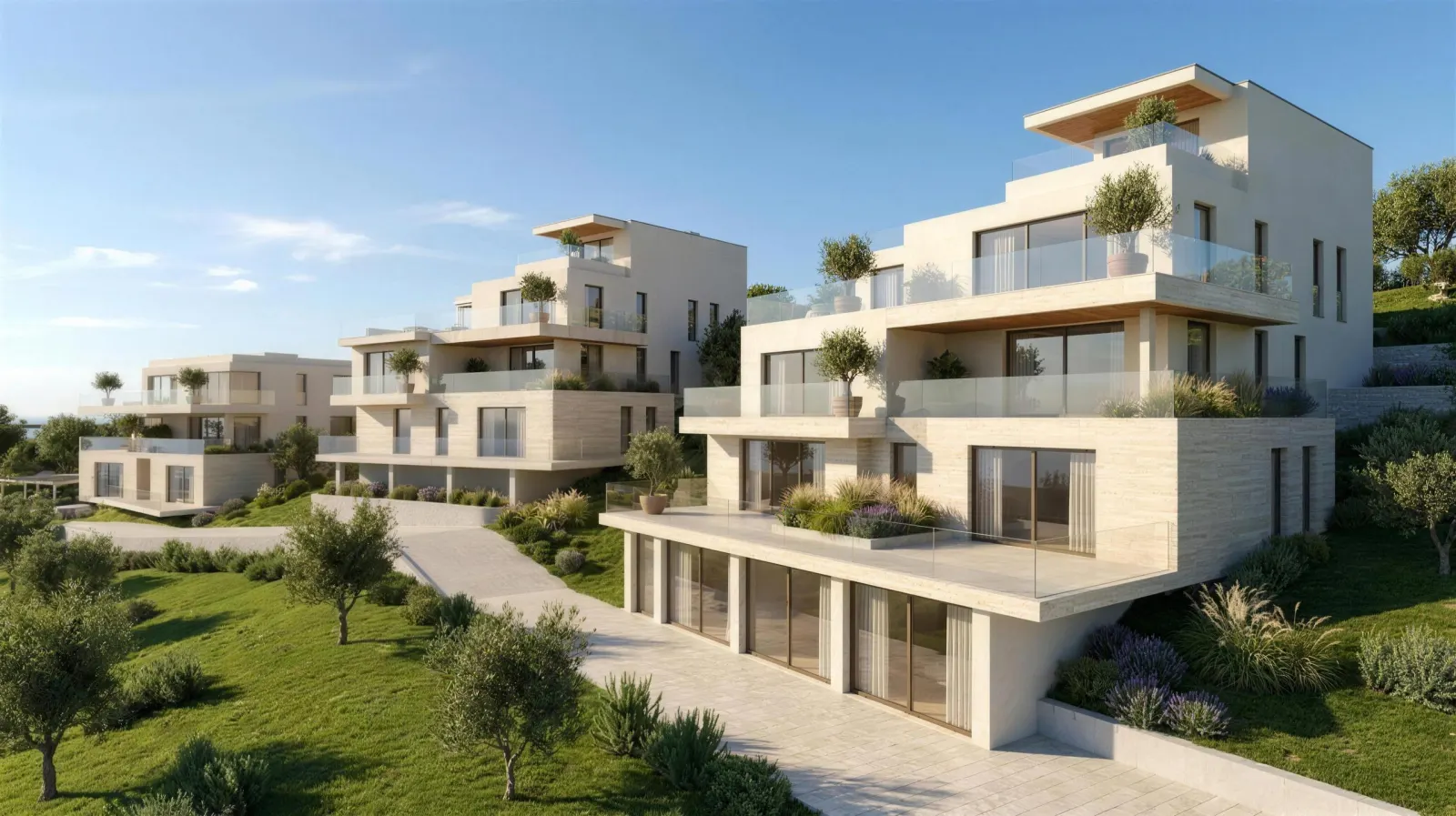
 AI · immagine generata
In Trieste you own a house once the land register records you as owner, not when you sign. The deed starts the process; registration in the Libro fondiario completes it. On six lists we counted in 2026, the notice of that registration reached the Region's Official Bulletin a median 15.7 months after the notary filed the application.
That sounds alarming. It mostly is not, provided you know what protects you in the meantime, what to read before you offer and what to settle with the notary.
In short
- Ownership passes with registration, not with the contract: article 2 of Royal Decree 499 of 1929, which governs the Austrian land registers still in force in Trieste.
- Your place in the queue is fixed on the day of filing: the order number of the application (the GN) sets the rank (land register law, article 29), and if a seller sells twice, the first to apply wins (article 6 of the decree).
- What is written in the register binds you: registered burdens count as declared in the sale contract (article 9). Read sheet C before you offer.
- The wait is real: of 1,346 decrees of the Trieste office notified on those six lists, 7% came within six months of filing and 72% after more than a year.
Why is Trieste different from the rest of Italy?
Because Trieste was Austrian until the end of the First World War, and its land registers survived the change of flag. Royal Decree 499 of 1929 governs them with a new text of the Austrian general law of 25 July 1871, annexed to the decree and still called the land register law (legge tavolare).
In most of Italy, ownership passes when buyer and seller agree: the consensus principle of article 1376 of the Civil Code. In Trieste it is the other way round. Article 2 of the 1929 decree says that ownership and other real rights over property are not acquired by an act between living persons without registration in the Libro fondiario. The Region of Friuli Venezia Giulia, which runs the offices, presents this as a deliberate departure from article 1376.
The system covers the provinces of Trieste and Gorizia, Muggia and the Karst villages included, and some municipalities in the province of Udine. Outside the region it lives on in Trentino and South Tyrol, the provinces of Trento and Bolzano, plus a handful of municipalities in the provinces of Belluno, Vicenza and Brescia.
Will it feel familiar if I'm from Austria, Germany or Slovenia?
Largely, yes. In Austria, § 431 of the Civil Code (ABGB) requires entry in the public books for ownership of land to pass. In Germany, § 873 of the BGB asks for agreement plus registration in the Grundbuch. The family resemblance is not a coincidence, and our guide to buying in Italy from Austria starts from it.
What differs: the Italian notary files the application, and a judge or a delegated registrar (conservatore) decides it by decree.
If you have bought in the United States or elsewhere in Italy, a signed and paid deed that does not yet make you the owner will feel odd. It is also the system's strength, and the reason our comparison of Italy and the US finds no title insurance here.
What does the land register actually show?
Each property has an entry, the partita tavolare, divided into sheets. In the words of the national council of notaries, sheet A describes the property, sheet B says who owns it, sheet C lists the burdens, such as mortgages and easements.
Three rules turn those sheets into something you can rely on.
- Public faith. Whoever is registered as owner is presumed to be the owner until proven otherwise (article 6 of the decree). Third parties who acquired rights relying on the register are protected (article 5).
- Sheet C is part of your contract. Burdens registered in the book are treated as declared in the sale contract (article 9). The seller stays liable only if he specifically declared the property free of them. In practice: you cannot later say nobody told you about the right of way.
- Only the registered owner can sell. Registrations can be made only against the person registered as holder of the right (land register law, article 21). An heir is registered by presenting a certificate of inheritance, issued by the court, to the land register judge (article 3 of the decree). Italy's rules on the European Certificate of Succession did not abolish it: Law 161 of 2014, article 32, keeps the local certificate in the land register territories.
Why does registration take so long?
Because a judge checks every application. The land register law (article 94) allows a registration only if the register shows no obstacle, the parties' capacity is not in doubt, and the documents justify the request and meet every legal requirement. It is a legality check, not a stamp.
For deeds by notaries, the Region notifies the decrees by publishing lists in its Official Bulletin (BUR) every Wednesday, with the application number and filing date. Notification is complete fifteen days after publication (regional law 12 of 2009, article 14, paragraph 30).
We counted the Trieste office's decrees on six of those lists: 1 April, 15 April (two), 23 September, 7 October and 21 October 2026. The count measures filing to notice, not filing to decree: the decree itself may be signed earlier.
| Six lists of 2026, Trieste office | Value |
|---|---|
| Decrees counted | 1,346 |
| Median, filing to notice | 15.7 months |
| Within 6 months | 7% |
| More than 12 months | 72% |
| More than 24 months | 14% |
Am I exposed while I wait?
Much less than the delay suggests. The rank and the double-sale rule above apply from the day of filing, and the decree that grants your application keeps that rank. A later buyer, or a creditor of the seller who files after you, queues behind.
What the wait affects is paperwork: until registration is completed, an extract will not show you as owner. If you might sell or refinance within a year or two, raise it with the notary: the law lets the last buyer be registered directly, provided every transfer in between is documented without a gap (land register law, article 22).
Two more points for the same conversation:
- The price deposit. At least one party can ask the notary to hold the price in a dedicated, ring-fenced account until registration and publicity are done and no new burdens have appeared (Law 147 of 2013, article 1, paragraphs 63 to 66). The law does not say whether, in Trieste, the filed application is enough or the decree is needed. With a median of 15.7 months that is not a detail: agree the release point in writing before the deed.
- The notary's duty. The notary must arrange the registration and is liable for damages for unjustified delay (article 11 of the decree). Ask for the GN number on the day.
Can I protect myself before the deed?
Yes, by annotating the preliminary contract. In the rest of Italy a notarised preliminary contract can be recorded under article 2645-bis of the Civil Code; in Trieste's Libro fondiario an annotation does that job (land register law, article 20). It needs a notarial deed or signatures authenticated by a notary or verified in court; the offer you sign at the agency will not do. The protection ends if the final deed is not registered within one year of the agreed completion date, and in any case within three years.
It is worth the fee when completion is months away, when a large sum leaves your account early, or when you are buying from a company. The German equivalent you may know is the Vormerkung (§ 883 BGB).
A worked example
Example. Assumptions: you sign the deed on Wednesday 3 February 2027 and the notary files the application the next day, when it receives its GN number. The flat and its cellar sit on two land register entries.
- Before the offer: two extracts, 2 × (€10 + €16) = €52. Sheet C shows a right of way across the courtyard. It is now part of your deal, whether or not the listing mentioned it.
- 4 February 2027: application filed. Your rank dates from this day.
- 10 February 2027: suppose a creditor of the seller files to register a mortgage. It ranks behind your purchase.
- Around late May 2028: if your file behaves like the 2026 median, the notice of the decree appears in the Bulletin, 15.7 months after filing. Notification is complete fifteen days later.
Dates, entries and the right of way are assumptions; the rules and the costs are real.
How do I check a property myself?
- At the office. The Trieste land register office (Ufficio tavolare, via Carpison 20) lets you consult and copy its documents without an appointment. An extract costs €10 in fees per entry and a certificate €15, plus €16 stamp duty, and is issued within ten working days of payment.
- Online, once you own. Owners can see the list of their own entries free of charge with SPID, CIE or CNS, the Italian digital identities.
- Through the notary, who searches the register before any deed: ask for a copy of the extract.
What to do now
- Before you offer, ask for the land register entry number (partita tavolare) and the cadastral municipality.
- Get the extract and read sheet C line by line, with a translation if you need one.
- Check that the seller is the registered owner; if the home was inherited, ask whether the heirs are already registered.
- If completion is distant or the deposit large, ask the notary to annotate the preliminary contract.
- On the day of the deed, write down the GN number and agree in writing when any deposited price will be released.
Frequently asked questions
Is the Libro fondiario the same as the catasto?
No. The catasto, kept by the Agenzia delle Entrate, identifies properties for tax purposes; the Libro fondiario records who owns them and what burdens them. The Region describes both as identifying the same properties for different ends. Before a purchase the two should tell the same story.
What if the judge refuses my application?
The decree can be challenged by complaint (reclamo) to the Tribunal sitting as a panel. The four conditions of article 94 tell you what the judge looked at, and therefore what to correct.
Does the wait change the purchase taxes?
No. The land register offices do not collect taxes: the purchase taxes are paid through the notary when the deed is registered at the Agenzia delle Entrate. The figures are in purchase taxes in Italy.
Where this guide stops
It does not replace the notary's searches, nor cover farmland, company sales or judicial auctions. The decree times come from six lists of 2026 and change with the office's workload. In a boundary dispute the register's maps have only subsidiary value.
If you own a fine home in Trieste and are thinking of selling, buyers from abroad will ask about the land register early. Selling to them is our specialism, English-first and with German-speaking support. Request a confidential valuation.
This guide informs; it is not legal advice: the notary has the last word on your file.
Sources
- R.D. 28 marzo 1929, n. 499, art. 1 (testo vigente) — I libri fondiari restano in vigore e sono regolati dalla legge generale del 25 luglio 1871, ristampata in allegato (legge tavolare); letto il 2026-10-25; riletto il 2026-10-31
- R.D. 499/1929, art. 2 — In deroga al codice civile, proprietà e diritti reali non si acquistano per atto tra vivi se non con l'iscrizione nel libro fondiario; letto il 2026-10-25; riletto il 2026-10-31
- R.D. 499/1929, art. 3 — Chi acquista per successione si iscrive solo presentando al giudice tavolare il certificato di eredità rilasciato dall'autorità giudiziaria; nessun diritto si iscrive contro l'erede non iscritto; letto il 2026-10-25; riletto il 2026-10-31
- R.D. 499/1929, art. 5 — Usucapione e acquisti originari si iscrivono con sentenza passata in giudicato; restano salvi i diritti dei terzi acquistati sulla fede del libro fondiario prima dell'iscrizione o dell'annotazione della domanda; letto il 2026-10-25; riletto il 2026-10-31
- R.D. 499/1929, art. 6 — Doppia alienazione: acquista chi prima ha domandato l'iscrizione; chi è iscritto si presume titolare fino a prova contraria; letto il 2026-10-25; riletto il 2026-10-31
- R.D. 499/1929, art. 9 — Oneri e diritti reali iscritti si considerano dichiarati nel contratto; resta la responsabilità del venditore che abbia dichiarato specificamente la cosa libera; letto il 2026-10-25; riletto il 2026-10-31
- R.D. 499/1929, art. 11 — Chi è obbligato a curare la pubblicità deve curare le iscrizioni nel libro fondiario e risponde dei danni per ritardo ingiustificato; letto il 2026-10-25; riletto il 2026-10-31
- Legge tavolare (allegato al R.D. 499/1929), art. 8 — Iscrizioni: intavolazioni (acquisti incondizionati), prenotazioni (acquisti condizionati, da giustificare), annotazioni; letto il 2026-10-25; riletto il 2026-10-31
- Legge tavolare, art. 20 — Formano oggetto di annotazione, fra l'altro, le domande degli artt. 2652-2653 c.c. (lett. g) e ogni altro atto per cui la legge ammette la pubblicità (lett. h), quindi il preliminare dell'art. 2645-bis; letto il 2026-10-25; riletto il 2026-10-31
- Legge tavolare, art. 21 — Le iscrizioni si eseguono solo contro chi risulta iscritto come titolare al tempo della domanda, o viene contemporaneamente intavolato; letto il 2026-10-25; riletto il 2026-10-31
- Legge tavolare, art. 22 — L'ultimo acquirente può chiedere l'iscrizione diretta provando la serie continua dei trasferimenti; letto il 2026-10-25; riletto il 2026-10-31
- Legge tavolare, art. 29 — Il grado delle iscrizioni è determinato dal numero d'ordine apposto dall'ufficio tavolare alla domanda; letto il 2026-10-25; riletto il 2026-10-31
- Legge tavolare, art. 94 — Il giudice tavolare ordina l'iscrizione solo se: nessun ostacolo dal libro, nessun dubbio su capacità e legittimazione, domanda giustificata dai documenti, documenti con tutti i requisiti; letto il 2026-10-25; riletto il 2026-10-31
- Regione FVG, I princìpi fondamentali del sistema tavolare (aggiornata il 22/11/2021) — Principio di iscrizione in deroga al principio consensualistico dell'art. 1376 c.c.; pubblica fede (presunzione di titolarità, oneri iscritti come dichiarati, tutela dei terzi); priorità; decreti del giudice tavolare o del conservatore delegato (art. 95-bis), reclamo al Tribunale in composizione collegiale; catasto (Agenzia delle Entrate) che identifica gli stessi beni a fini fiscali; letta il 2026-10-25; riletto il 2026-10-31
- Regione FVG, Cos'è il Libro fondiario (aggiornata il 22/11/2021) — Libro fondiario nelle province di Trieste e Gorizia e in alcuni comuni della provincia di Udine; libro maestro, collezione dei documenti, intavolazioni, prenotazioni, annotazioni; consultabile da chiunque; mappe con valore probatorio sussidiario; letta il 2026-10-25; riletto il 2026-10-31
- Regione FVG, Notifiche dei decreti di accoglimento (aggiornata il 30/11/2021) — Decreti su atti di notai notificati con la pubblicazione sul BUR di GN e data di presentazione, ogni mercoledì; notifica perfezionata dopo quindici giorni (L.R. 12/2009, art. 14, comma 30); letta il 2026-10-25; riletto il 2026-10-31
- Regione FVG, Tavolare: come contattarci — Ufficio tavolare di Trieste, via Carpison 20; consultazione e copie dei documenti senza appuntamento; letta il 2026-10-25; riletto il 2026-10-31
- Regione FVG, Tavolare: come richiedere un estratto tavolare o una certificazione (aggiornata il 01/09/2026) — 10 € di diritti per estratto di una singola partita, 15 € per una certificazione, più 16 € di imposta di bollo salvo esenzioni; rilascio entro dieci giorni lavorativi dal pagamento; letta il 2026-10-25; riletto il 2026-10-31
- Regione FVG, Tavolare: consultazione delle proprietà personali — Con SPID, CIE o CNS il titolare consulta gratis l'elenco delle proprie partite; letta il 2026-10-25; riletto il 2026-10-31
- Consiglio Nazionale del Notariato, Studio n. 106-2011/T «Vendita immobiliare in regime tavolare» — Sistema tavolare nelle province di Trieste, Gorizia, Trento e Bolzano; fogli A, B (proprietà) e C (aggravi); domanda del notaio al giudice tavolare, numero GN e grado dalla presentazione; gli uffici tavolari non riscuotono tributi; letto il 2026-10-25; riletto il 2026-10-31
- Agenzia delle Entrate, Dichiarazione di successione, istruzioni, fascicolo 2 (sistema tavolare) — Sistema tavolare nelle province di Trieste, Gorizia, Trento e Bolzano e in alcuni comuni delle province di Udine, Vicenza, Brescia e Belluno; letto il 2026-10-25; riletto il 2026-10-31
- Legge 30 ottobre 2014, n. 161, art. 32 — Certificato successorio europeo rilasciato dal notaio; nei territori del libro fondiario continuano ad applicarsi le norme del R.D. 499/1929 sul certificato di eredità (comma 3); letto il 2026-10-25; riletto il 2026-10-31
- Tribunale di Trieste, Come fare per: Certificato di eredità — Il certificato di eredità si chiede al Tribunale ed è il presupposto dell'intavolazione degli eredi; letto il 2026-10-25; riletto il 2026-10-31
- Legge 27 dicembre 2013, n. 147, art. 1, comma 63 (e commi 64-66) — Deposito del prezzo dal notaio su un conto dedicato se lo chiede almeno una parte; svincolo dopo registrazione e pubblicità senza gravami nuovi (commi successivi); letta il 2026-10-25; riletto il 2026-10-31
- Codice civile, art. 2645-bis — Trascrizione del preliminare da atto pubblico o scrittura autenticata; effetti cessati se il definitivo non è trascritto entro un anno dalla data convenuta e comunque entro tre anni; letto il 2026-10-25; riletto il 2026-10-31
- ABGB (Austria), § 431 — Per trasferire la proprietà di immobili il negozio va iscritto nei pubblici registri; letto il 2026-10-25; riletto il 2026-10-31
- BGB (Germania), § 873 — Trasferimento della proprietà di un fondo: accordo (Einigung) e iscrizione nel Grundbuch; letto il 2026-10-25; riletto il 2026-10-31
- BGB (Germania), § 883 — Vormerkung a garanzia del diritto al trasferimento; letto il 2026-10-25; riletto il 2026-10-31
- BUR FVG n. 13 del 01/04/2026, elenco dei decreti dell'Ufficio tavolare di Trieste — Conteggio nostro: 283 decreti, mediana 14,0 mesi fra presentazione e pubblicazione; letto il 2026-10-25; riletto il 2026-10-31
- BUR FVG n. 15 del 15/04/2026 — Due elenchi dell'Ufficio tavolare di Trieste ex art. 14, c. 30 (pag. 138 e 140): 268 decreti, mediana 16,6 mesi, e 119 decreti, mediana 22,7 mesi (il secondo elenco mancava nel conteggio del 25/10, aggiunto dalla verifica del 31/10); letto il 2026-10-25; riletto il 2026-10-31
- BUR FVG n. 38 del 23/09/2026 — Conteggio nostro: 141 decreti, mediana 14,8 mesi; letto il 2026-10-25; riletto il 2026-10-31
- BUR FVG n. 40 del 07/10/2026 — Conteggio nostro: 262 decreti, mediana 16,6 mesi; letto il 2026-10-25; riletto il 2026-10-31
- BUR FVG n. 42 del 21/10/2026 — Conteggio nostro: 273 decreti, mediana 14,7 mesi. Sui sei elenchi dei cinque fascicoli (verifica del 31/10, script sul testo dei PDF «noLEGAL», solo gli elenchi ex art. 14, c. 30, escluse le trasposizioni del BUR 13): 1.346 decreti, mediana 15,7 mesi fra presentazione della domanda e pubblicazione della notifica, 7% entro 6 mesi (88, contando in mesi di calendario), 72% oltre 12 mesi (974), 14% oltre 24 mesi (182). Il conteggio del 25/10 (1.227 decreti, mediana 15,6, identico a quello della guida TSI proposta-preliminare-rogito) aveva solo il primo elenco del 15/4; letto il 2026-10-25; riletto il 2026-10-31